
Livestock wastewater carries a lot of organic matter, suspended solids, nitrogen, phosphorus and microorganisms. Since 1 September 2025 it falls under QCVN 62:2025/BTNMT, issued with Circular 04/2025/TT-BTNMT of 28 February 2025, which replaces QCVN 62-MT:2016/BTNMT. Note that QCVN 40:2025 does not apply to livestock wastewater.
Key points
- Columns A, B and C are set by the function of the receiving water; if the discharge zoning is not yet determined, Column B of Table 1 applies.
- Livestock facilities already operating, or projects with an EIA decision, environmental permit or valid dossier before 1 September 2025, may keep applying QCVN 62-MT:2016/BTNMT and local regulations until the end of 31 December 2031. New, expanded or upgraded livestock projects filing after 1 September 2025 apply the new standard. From 1 January 2032 all cases must meet QCVN 62:2025.
- The applicable parameters and limits must be stated in the EIA decision, environmental permit or environmental registration. Monitoring reported to the authority must be done by an organisation certified to provide environmental monitoring services.
Limit values (Table 1, projects and commercial livestock farms)
| Parameter | Column A / B / C |
|---|---|
| pH | 6–9 / 6–9 / 6–9 |
| BOD5 (mg/l) | 40 / 60 / 100 |
| COD (mg/l) | 65 / 150 / 250 |
| TOC (mg/l, alternative to COD) | 35 / 70 / 130 |
| TSS (mg/l) | 40 / 100 / 120 |
| T-N (mg/l) | 20 / 60 / 120 |
| T-P (mg/l), receiving water is a lake, pond or lagoon | 2.0 / 3.0 / 4.0 |
| T-P (mg/l), river, stream, canal or ditch | 4.0 / 14 / 30 |
| T-P (mg/l), sea water | 4.0 / 14 / 40 |
| Coliform (MPN/100 mL) | 3,000 / 5,000 / 5,000 |
Household-scale livestock
Household livestock projects and facilities discharging to a receiving water corresponding to Column B or C may choose either to treat the wastewater to the Column B or C limits, or to collect it into a biogas digester or settling tank or pond with a total effective volume of at least 1.5 m³ per livestock unit, leak-proof so that wastewater does not seep into the soil.
Special cases
- Wastewater from the holding and raising of animals at a slaughterhouse, when combined with slaughter wastewater, is managed as industrial wastewater under QCVN 40:2025.
- Livestock wastewater combined with industrial wastewater must follow QCVN 40:2025; domestic wastewater combined with livestock wastewater is managed as livestock wastewater.
- Livestock wastewater connected to an urban or concentrated residential collection and treatment system, or to an industrial park or cluster, must meet the requirements of the owner or operator of that system.
Typical treatment process
- Manure and solids separation (screens, manure separators) to cut the load at the start.
- Equalisation, anaerobic or biogas tank to remove most organic matter.
- Coagulation and flocculation to reduce suspended solids and phosphorus.
- Aerobic treatment (aerotank) to reduce BOD, COD, ammonium and nitrogen.
- Settling and disinfection before discharge to control coliform.
How FUDESO can help
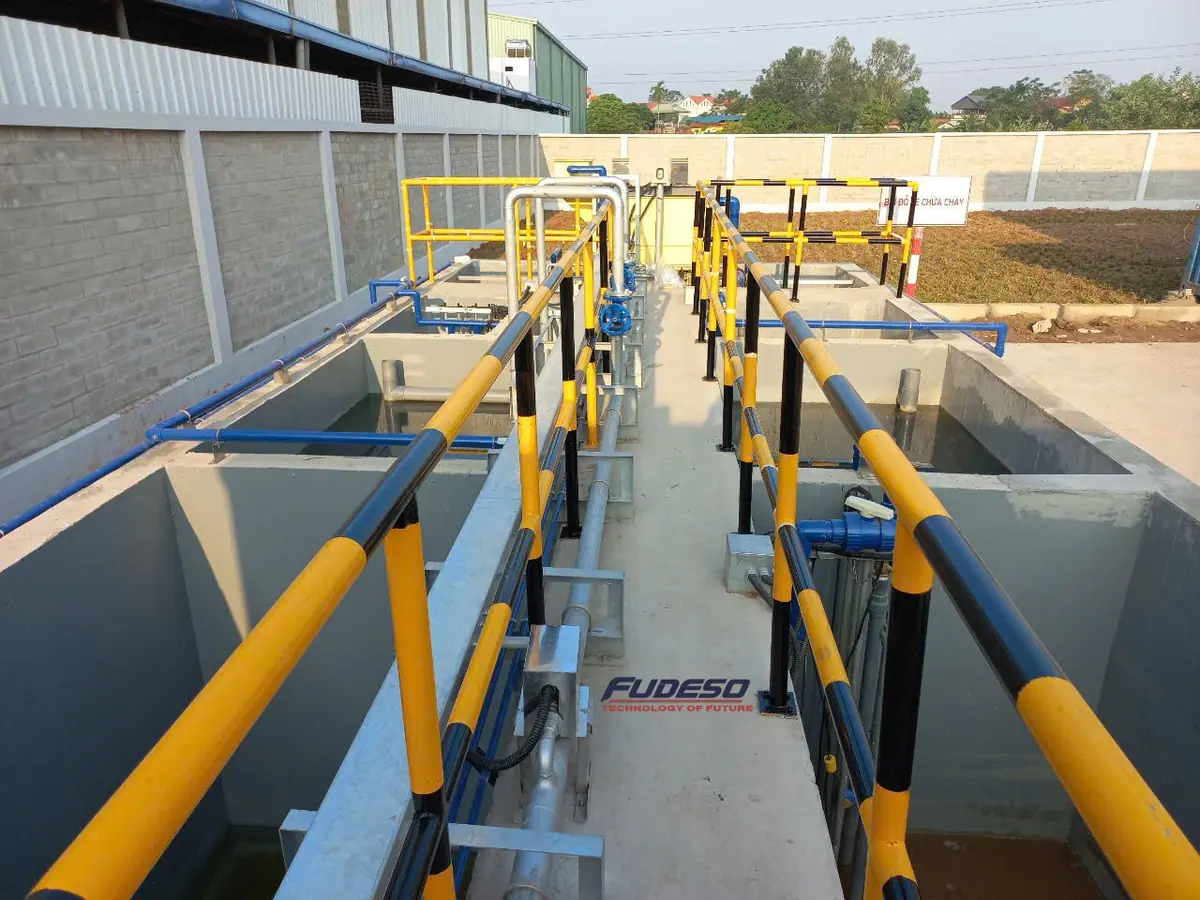
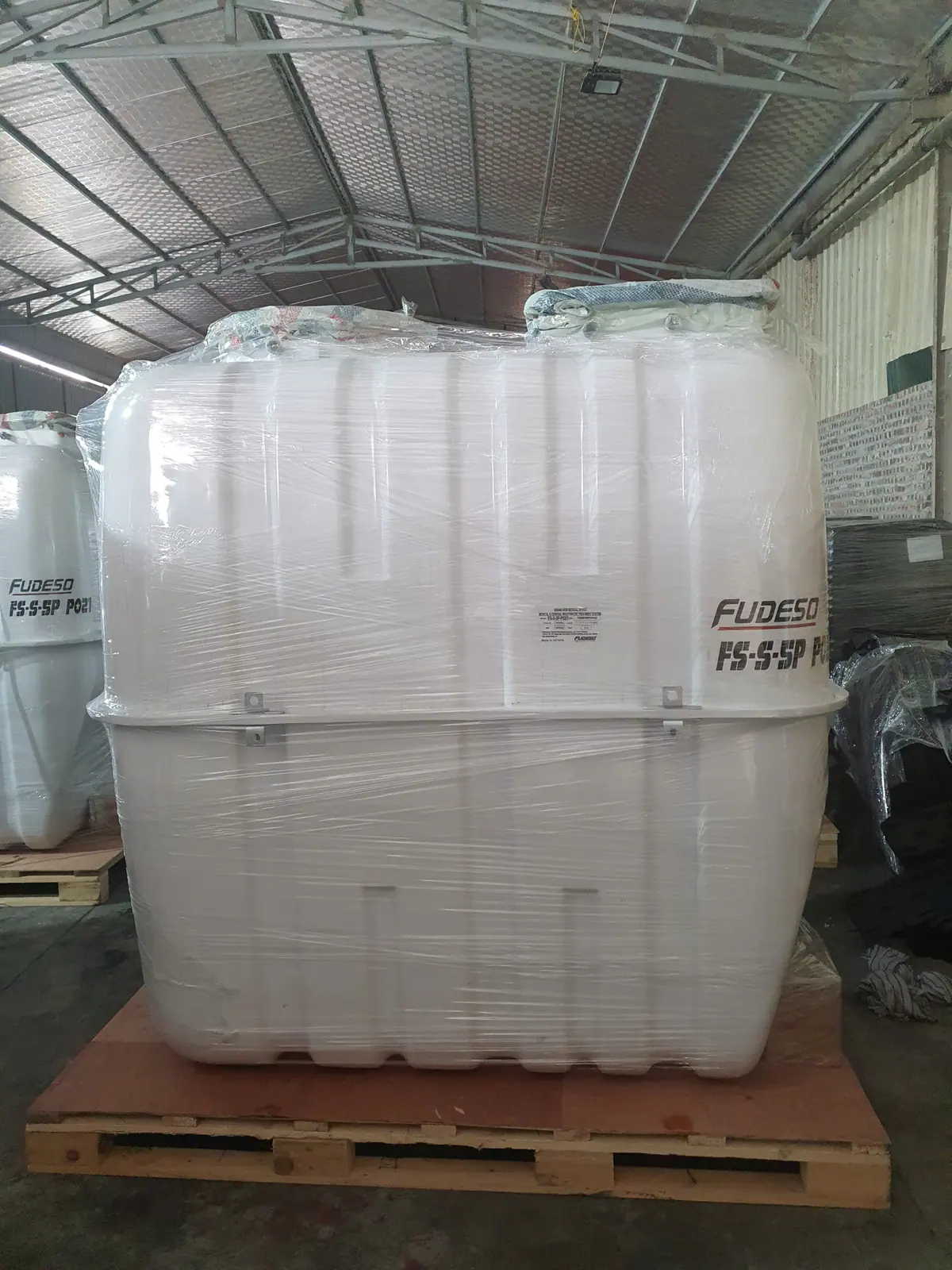
The livestock wastewater plants FUDESO has published use coagulation–flocculation combined with an aerotank: the Belga plant in Vinh Phuc (60 m³/day, completed September 2024) and the BHD plant in Cambodia (60 m³/day, completed December 2025). For other sizes, FUDESO engineers survey and propose a dedicated solution. See livestock wastewater treatment and industrial wastewater treatment.
Download the regulation texts
- QCVN 62:2025/BTNMT (PDF, 445 KB)
See more documents in the regulation library.
Source: QCVN 62:2025/BTNMT and Circular 04/2025/TT-BTNMT (Official Gazette No. 499 + 500 of 16 March 2025, Articles 2, 3, 4 and sections 2.1, 2.2, 4.9–4.11 of the standard). For reference only; the column for each facility is stated in its EIA decision, environmental permit or environmental registration.
Request a consultation
A FUDESO engineer will get back to you soon to discuss and arrange a site survey.
Hotline (+84) 24 3206 3222