
Are Sanctions Strong Enough to Deter Discharges That Seriously Harm the Environment?
Posted 13/04/2017
Are Sanctions not Strong Enough to Deter Discharges That Seriously Harm the environment?
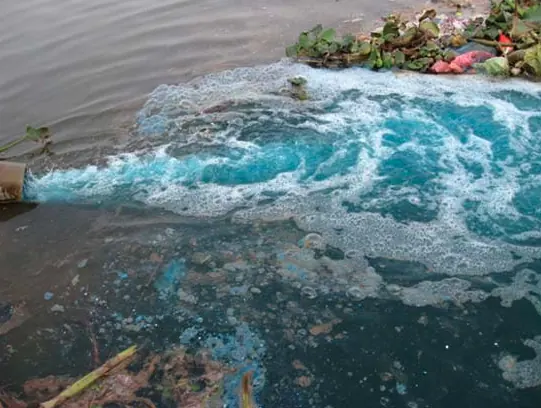
Many companies, even after being warned, reprimanded or dealt with by the competent authorities, return to their old ways, and assurances of compliance with national environmental standards remain a big question mark. These violations keep recurring, which confirms the question above. Joint inter-agency inspections have recently uncovered even more manufacturers illegally discharging waste, most notably in industrial zones in several central provinces. Many industrial zones have started operating even without wastewater treatment stations. Companies using advanced foreign technology have also violated discharge rules; the case of FORMOSA HA TINH is perhaps the most typical and widely known example. Even enterprises engaged in industrial wastewater treatment cause pollution. Notably, many companies, even after being fined repeatedly or temporarily shut down, still openly reoffend.
Managing wastewater treatment in industrial zones is not easy. Recently, the program “Today's Issues” on Vietnam Television held a discussion with Associate Professor Dr. Truong Manh Tien, Chairman of the Vietnam Environmental Economics Association, to better understand the deterrent effect of sanctions for environmental crimes. His views were as follows:
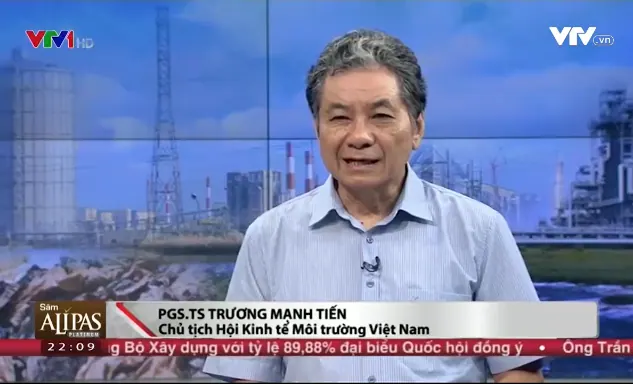
On the root cause of the growing number of companies violating environmental rules, Mr. Truong Manh Tien said: “Until now, the sanctions for industrial zones discharging polluting wastewater have been too light, so companies are willing to accept penalties, and the problem keeps recurring. The new law adopted in 2015, which is about to take effect, will define environmental crimes more clearly. Only then will deterrence be strengthened. Both organizations and individuals will be penalized, which will make businesses realize that penalties are no longer limited to economic and administrative measures but will follow criminal-law frameworks.”
Related environmental news:
Several environmental pollution incidents of particularly serious nature in 2016.
Shortcomings in current environmental pollution management.
More than 6 billion lessons for companies that ignore the environment.
Fine of VND 100 million for discharging wastewater without treatment.
Shortcomings in discharge management remain and will take time to show new results. The Chairman of the Vietnam Environmental Economics Association welcomed and supported the Ministry of Natural Resources and Environment's plan and upcoming inspection teams targeting all discharging projects nationwide. Waste that is transferred must be covered by a commitment signed with an entity licensed to treat that specific waste; signing with entities without the proper functions is strictly prohibited. Furthermore, treatment sites must also fully meet technical conditions, from landfilling to storage, preservation and treatment.
According to statistics from the Ministry of Natural Resources and Environment, last year the competent authorities detected and handled more than 500 violating industrial facilities that polluted the environment, with fines exceeding VND 26 billion, a record figure. Since last year, the maximum administrative fine has doubled to VND 2 billion per violation for organizations or individuals. Yet in reality, many manufacturers are willing to pay fines rather than invest in waste treatment systems. This shows that the shortcomings in environmental discharge management still persist.
Wastewater treatment has not received adequate attention
Currently, industrial zone discharges remain the largest source of pollution. However, the management and treatment of hazardous waste at most units and facilities has not received adequate attention. Key pollution hotspots include the Thi Vai River and Dong Nai River, and industrial zones along the Nhue River in Hanoi... At most of these companies and enterprises, the design and construction of wastewater treatment systems is unreasonable, and many industrial zones even lack wastewater treatment areas that meet standards. According to the Environmental Police Department (Ministry of Public Security), some large economic groups have not paid enough attention to wastewater and waste treatment. Specifically, in 2008 the Electricity Group was lax in managing transformer oil containing PCBs, leading to illegal purchase and recycling of hazardous waste in many localities. Many organizations and individuals engaged in collecting, transporting and treating waste fail to comply with regulations, such as using non-specialized vehicles, not sorting waste after collection, and burying hazardous waste mixed with ordinary waste... In addition, illegal purchase, transport and recycling of lead batteries occur in many places, some on a fairly large scale... Illegal mining, transport and trade of minerals and construction materials are also widespread, causing resource depletion, soil and water pollution, and damage to environmental landscapes...
Stronger sanctions are needed
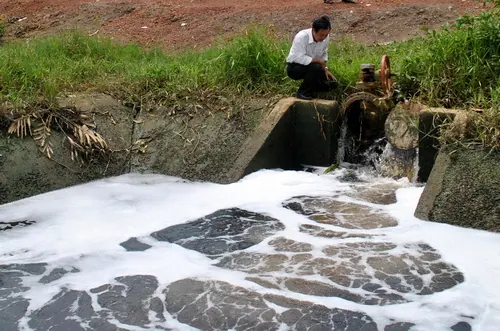
Amid the highly serious and widespread situation of environmental crime, over the past year the Environmental Police Department has organized a number of training courses and thematic seminars on combating environmental crime, to educate and raise awareness among individuals, units and businesses about strictly complying with the Law on Environmental Protection. The Environmental Police have actively investigated and handled violations and identified many loopholes in the mechanisms, policies and implementation of the Law on Environmental Protection, and have proposed amendments and supplements. In practice, however, it is very difficult to prosecute the 10 offenses related to environmental violations under the Law on Environmental Protection, because the qualitative and quantitative criteria in the regulations are not tight and, to date, no guiding circular has been issued. For example, the VEDAN case was determined to be extremely serious, yet ultimately only about VND 127 billion was retroactively collected; Viet Tri Paper JSC was only charged about VND 1 billion... The fines imposed are far too small compared with the harm the companies caused to residents. For individuals and businesses to strictly comply with the Law on Environmental Protection, it is essential to add sanctions that are strong enough to deter. Given the recent series of violations in wastewater treatment and environmental safety, many units have been fined more than VND 200 million for not having a reliable wastewater treatment system, discharging and causing environmental pollution...
.
Request a consultation
A FUDESO engineer will get back to you soon to discuss and arrange a site survey.
Hotline (+84) 24 3206 3222