
Industrial exhaust-gas standard QCVN 19:2024 and how to choose a treatment tower
បានផ្សាយ 21/11/2026ខ្លឹមសារនេះមិនទាន់បានបកប្រែទេ។ កំពុងបង្ហាញជាភាសាអង់គ្លេស។
Industrial exhaust gas is controlled by QCVN 19:2024/BTNMT, a consolidated standard that replaces several earlier ones: QCVN 19:2009/BTNMT (dust and inorganic substances), QCVN 20:2009/BTNMT (some organic substances), QCVN 21:2009/BTNMT (chemical fertiliser), QCVN 22:2009/BTNMT (thermal power), QCVN 23:2009/BTNMT (cement), QCVN 34:2010/BTNMT (petrochemical refining, dust and inorganic part) and QCVN 51:2017/BTNMT (steel production).
Limits are split into three columns
- Column A: facilities located in a strictly protected zone.
- Column B: facilities located in an emission-restricted zone.
- Column C: facilities in neither case.
Values are in mg/Nm³, where 1 Nm³ is the volume of gas at 25°C and an absolute pressure of 760 mm Hg. Limits depend on the emitting equipment and the fuel; for example CO, SO₂ and NOx (as NO₂) have separate values for gas-, biomass-, liquid- and solid-fuel equipment and for waste incinerators.
Effective date and transition
- The standard was issued with Circular 45/2024/TT-BTNMT, signed on 30 December 2024 and effective from 1 July 2025.
- Facilities already operating, or projects with an approved EIA decision or a valid dossier accepted for EIA appraisal, environmental permit or environmental registration before 1 July 2025, may keep applying the earlier exhaust-gas standards for their type of activity and local regulations until the end of 31 December 2031.
- New projects, expansions or capacity increases filing after 1 July 2025 must apply QCVN 19:2024/BTNMT.
- From 1 January 2032 the facilities above must meet QCVN 19:2024/BTNMT, unless the provincial People’s Committee sets an earlier roadmap.
- The pollutants to be controlled are specified in the EIA decision or environmental permit by type of emission source; for technologies that generate new parameters not in the standard, limits follow the standards of a G7 country.
Volatile organic compounds (TVOC)
For paint, printing, glue and rubber plants, a key parameter is volatile organic compounds expressed as TVOC (including benzene, toluene, ethylbenzene, xylene, ethyl acetate and butyl acetate). Limits by equipment type:
| Emitting equipment | TVOC (mg/Nm³), Column A / B / C |
|---|---|
| Painting and surface coating (incl. drying and spraying) | 50 / 80 / 100 |
| Printing | 50 / 80 / 100 |
| Surface treatment, degreasing | 50 / 80 / 100 |
| Manufacture of paint, varnish, ink, glue | 80 / 120 / 150 |
| Rubber production | 80 / 100 / 150 |
| Waste incinerators | 30 / 40 / 50 |
How to choose an exhaust-gas treatment technology
- Identify the pollutants (dust, acid gases, solvent vapour, odour…), gas flow and inlet concentration by measurement.
- Check the limits in the facility’s EIA decision or environmental permit (Column A, B or C).
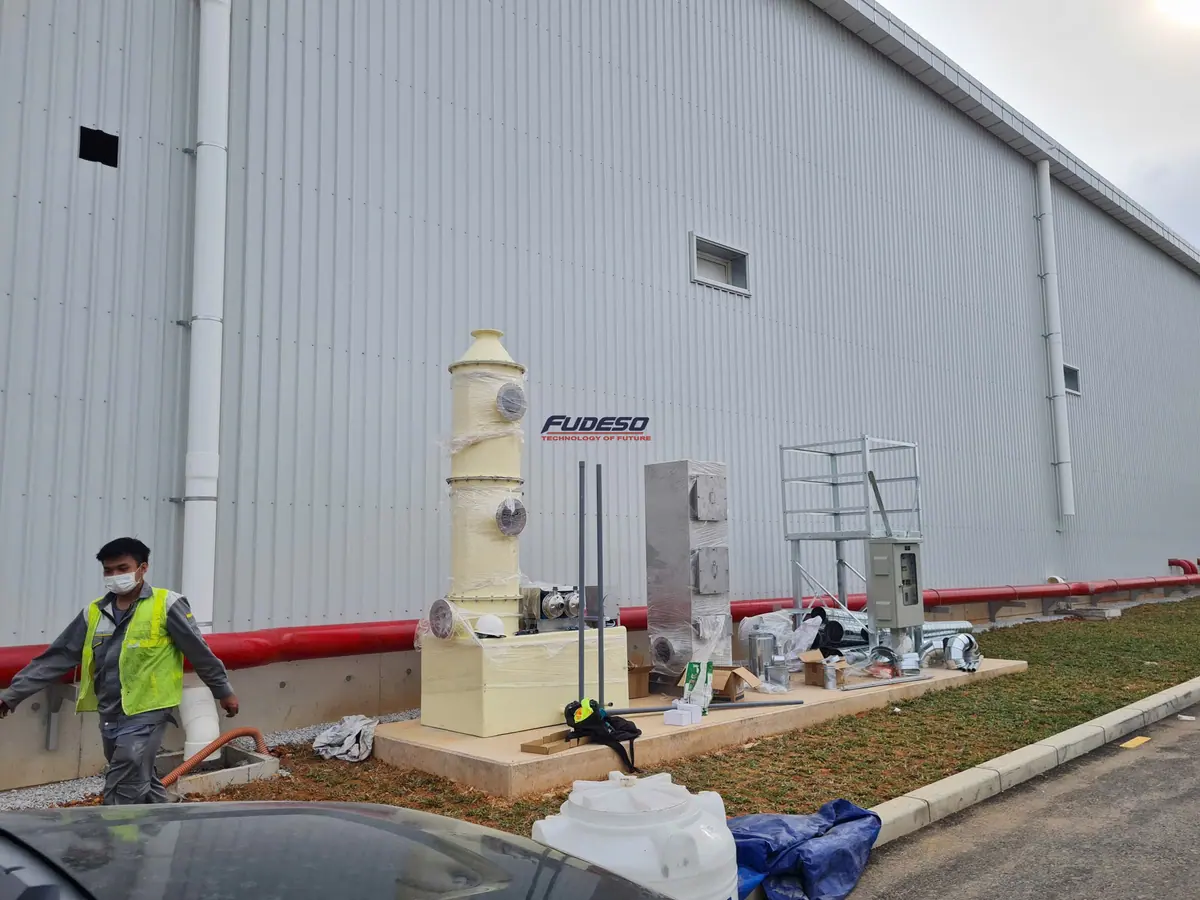
- Choose the equipment: a wet scrubber for acid gases and soluble dust; an activated-carbon adsorption tower for solvent vapour and organic compounds. When the carbon is saturated it must be replaced or regenerated.
- Post-treatment monitoring by a qualified organisation to demonstrate compliance.
See also exhaust gas treatment for factories: adsorption towers, scrubbers and other methods. Send your project information so FUDESO engineers can advise.
Download the regulation texts
- QCVN 19:2024/BTNMT (PDF, 675 KB)
- QCVN 30:2025/BNNMT (lò đốt chất thải) (PDF, 2.0 MB)
- QCVN 41:2025/BNNMT (đồng xử lý trong lò xi măng) (PDF, 901 KB)
See more documents in the regulation library.
Source: Circular 45/2024/TT-BTNMT and QCVN 19:2024/BTNMT, Official Gazette No. 151 + 152 of 24 January 2025 (Articles 2, 3 and 4 and Table 1). The article gives only some values and is for reference; detailed limits by equipment type, fuel and reference oxygen level must be checked against the official text and the facility’s environmental permit.
ស្នើសុំការប្រឹក្សា
វិស្វករ FUDESO នឹងទាក់ទងត្រឡប់ទៅវិញ ដើម្បីពិភាក្សា និងណាត់ការអង្កេតទីតាំង។
ខ្សែទូរស័ព្ទបន្ទាន់ (+84) 24 3206 3222