
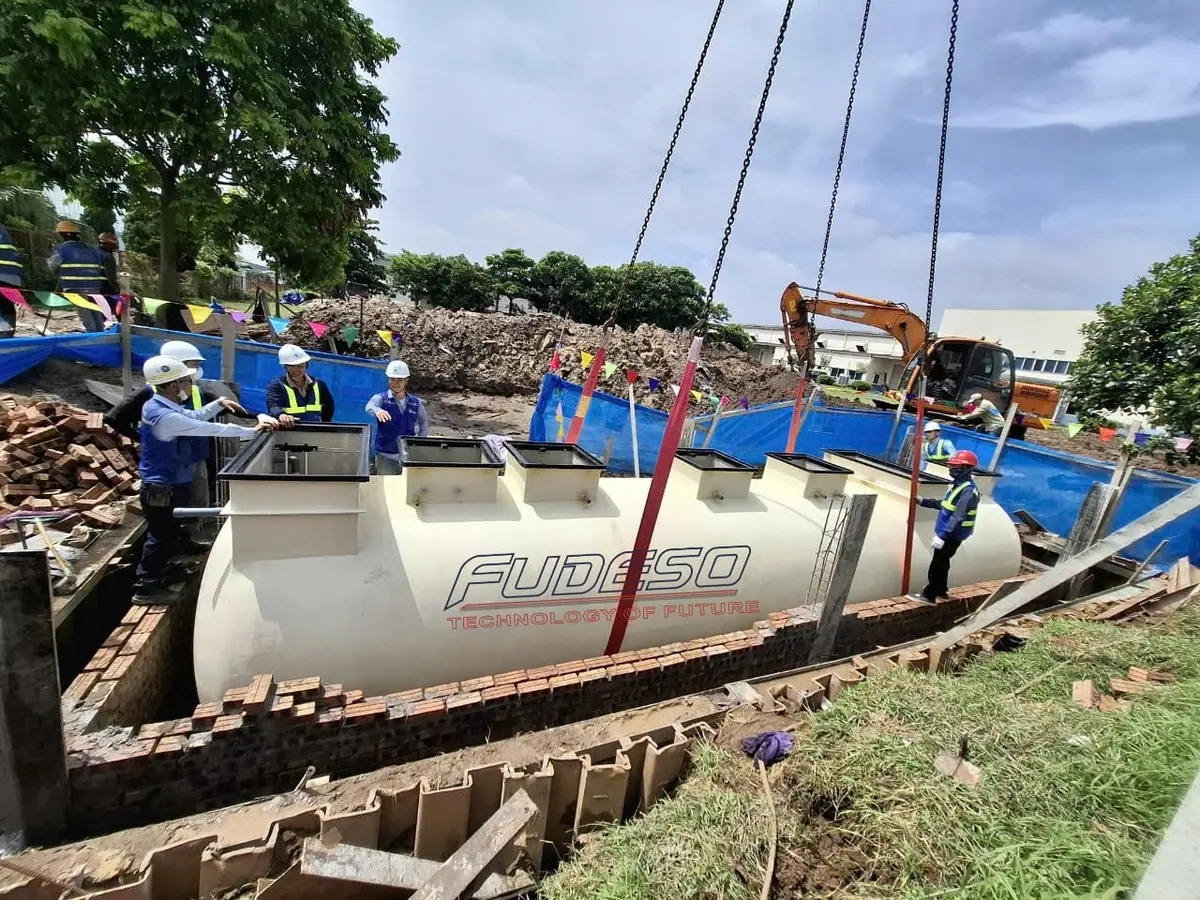
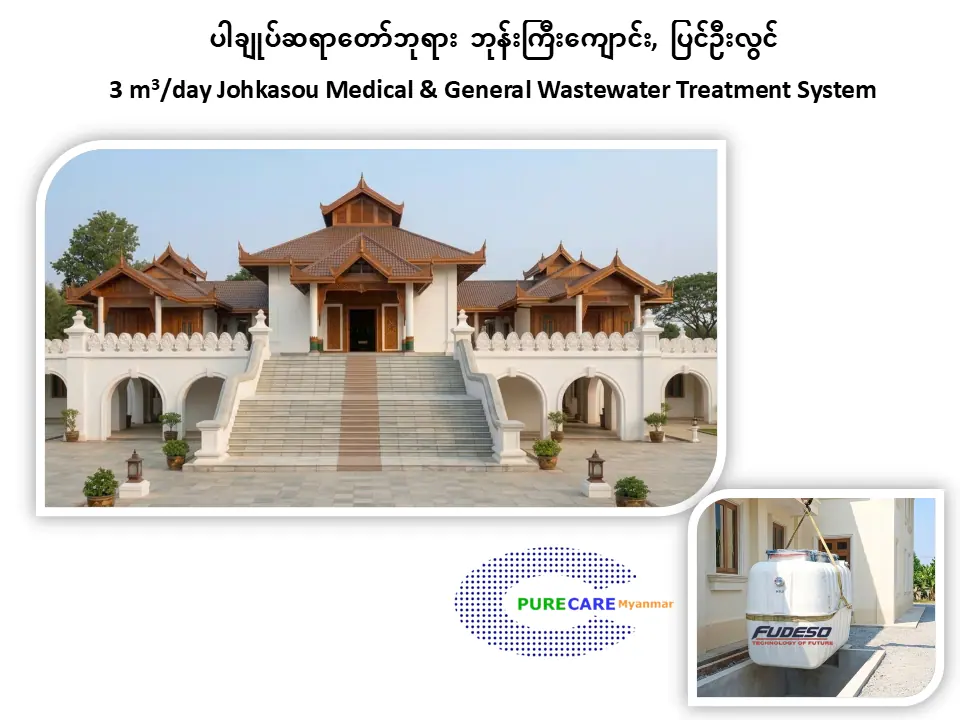
Johkasou: On-Site Domestic Wastewater Treatment System
Johkasou is an on-site domestic wastewater treatment system of Japanese origin, installed for villas, households, apartments, hotels, restaurants and hospitals.
What is Johkasou?
Johkasou (浄化槽) is a Japanese compound word: “Johka” means purification, and “sou” means tank. It is an on-site domestic wastewater treatment system installed for villas, households, apartment complexes, hotels, restaurants, hospitals and similar buildings. Johkasou treats wastewater from toilets, bathrooms, washing machines and kitchens at the same time, using anaerobic and aerobic microorganisms to remove BOD, organic and inorganic substances, and harmful bacteria from wastewater.
The first Johkasou in Japan was installed in 1911. The term Johkasou officially appeared in the building sanitation standards in 1944, and the Johkasou Law was enacted in 1983 to regulate the production, installation and management of systems, in line with the development of mass production of fiberglass-reinforced composite (FRP) tanks. See also: Johkasou terminology.
Selecting Johkasou by Usage Scale
According to FUDESO documentation, Johkasou is divided into three categories by usage scale. FUDESO models are selected based on the output standards for BOD, N and P.
| Scale | Number of users | Treatment capacity | Commonly used technology | Typical applications | FUDESO model |
|---|---|---|---|---|---|
| Small | 5–10 people | 1–2 m³/day | Contact aeration; FUDESO replaces it with the AAO-MBBR process | Households | FS-S-xP |
| Medium | 11–50 people | 2 to under 10 m³/day | MBBR, usually integrated with an Airlift Pump | Residential clusters | FS-A-xP or FS-B-xP |
| Large | From 51 people | From 10 m³/day | MBBR; for special cases (output requirements, water reuse, installation area), Aerotank, MBR or a combination with RO filtration is used | Apartment buildings, schools, restaurants, hotels, hospitals, offices | FS-A-xP, FS-B-xP or FS-H-xP |
See also: Johkasou classification
Treatment Technologies
Features According to FUDESO Documentation
- Treatment capacity from 1 m³/day up to 1,400 m³/day or more, combined from one or several modules.
- Installation time from 2 to 30 days, depending on treatment scale.
- Can be relocated to a new site without affecting the internal equipment.
- Tank shell made from fiberglass-reinforced composite (FRP).
- Suitable for households, villa areas, hotels, restaurants, high-rise buildings, eco-tourism areas, resorts and hospitals.
FUDESO and Johkasou
FUDESO began approaching Johkasou in 2006 through Japanese partners. FUDESO's first Johkasou systems were launched in December 2012, with more than 40% of auxiliary equipment localized in Vietnam. Designs are customized to project requirements: size, installation location, effluent water quality, investment budget, and operation and maintenance practices.
During production, customers can take part in inspecting the product before shipment and receive image reports documenting measurements and verification at each stage. Read more: FUDESO Johkasou.
Frequently asked questions
What is Johkasou?
Johkasou is an on-site domestic wastewater treatment system of Japanese origin. Its name combines “Johka” (purification) and “sou” (tank). The system uses anaerobic and aerobic microorganisms to remove BOD, organic and inorganic substances, and harmful bacteria from wastewater.
Which wastewater sources can Johkasou treat?
Johkasou treats all domestic wastewater sources at the same time: toilets, bathrooms, washing machines and kitchens.
Which buildings can use Johkasou?
According to FUDESO documentation, Johkasou is suitable for households, villa areas, hotels, restaurants, high-rise buildings, eco-tourism areas, resorts, hospitals and apartment buildings. Factories also use Johkasou to treat wastewater at the source.
What treatment capacity can Johkasou handle?
The system consists of one or more modules, suitable for treatment capacities from 1 m³/day to 1,400 m³/day or more.
How do I choose Johkasou by scale?
Small scale (5–10 people, 1–2 m³/day) is for households. Medium scale (11–50 people, from 2 to under 10 m³/day) is for residential clusters and usually uses MBBR technology. Large scale (from 51 people, from 10 m³/day) is for apartment buildings, schools, restaurants, hotels, hospitals and offices; it usually uses MBBR, and Aerotank, MBR or a combination with RO filtration when there are special requirements for output quality, water reuse or installation area.
How long does Johkasou installation take?
According to FUDESO documentation, installation takes from 2 to 30 days, depending on treatment scale.
When did Johkasou originate?
The first Johkasou in Japan was installed in 1911. The term Johkasou officially appeared in building sanitation standards in 1944, and the Johkasou Law was enacted in 1983.
Since when has FUDESO made Johkasou?
FUDESO began approaching Johkasou in 2006 through Japanese partners, and launched its first Johkasou systems in December 2012.
What is MBBR?
MBBR (Moving Bed Biofilm Reactor) uses free-floating plastic media in an aerated tank so that microorganisms grow as a biofilm on the media and remove BOD, COD and nitrogen from wastewater. It is more compact than a conventional septic tank and tolerates shock loads well. FUDESO supplies MBBR Johkasou in the FS-S-xP series (1–11 m³/day) and the FS-A(M)-xP series (from 12 m³/day).
What is MBR and how does it differ from MBBR?
MBR (Membrane Bio-Reactor) combines activated-sludge treatment with a very fine membrane filter, so sludge concentration stays high (about 8,000–12,000 mg/l), the tank stays compact and the effluent is of high quality, suitable for reuse such as watering plants, street and vehicle washing or fire fighting. MBBR uses biofilm media with a clarifier and is simpler to operate. FUDESO’s MBR series is FS-H-xP, from 10 m³/day.
Which discharge standard does the effluent of a FUDESO Johkasou meet?
According to the FUDESO catalogue, effluent quality is BOD 30 mg/l, T-N 20 mg/l and SS 50 mg/l for the FS-S-xP and FS-A(M)-xP series, and BOD 30, T-N 20 and TP 1 mg/l for the FS-H-xP MBR series. For the small-capacity MBBR Johkasou products the effluent meets Column B of QCVN 14:2025/BTNMT, and Column A with an added chemical dosing unit. Exact values for each project are confirmed at design stage.
What does the cost of a Johkasou wastewater system depend on?
Cost depends on capacity, type of wastewater, required effluent standard (Column A or B), technology (MBBR or MBR), tank material and size, site conditions (excavation, buried or above-ground installation) and transport. FUDESO engineers quote after receiving project information or a site survey; the website does not publish general prices.
Completed projects
All projects →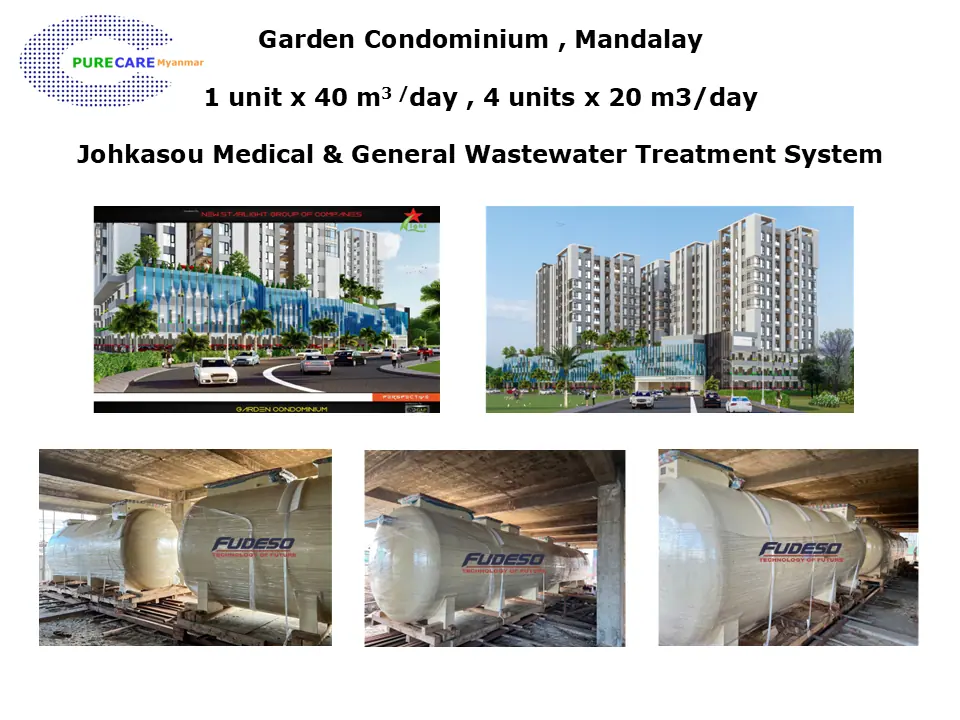
Integrated Wastewater Treatment Tank for Garden Condominium
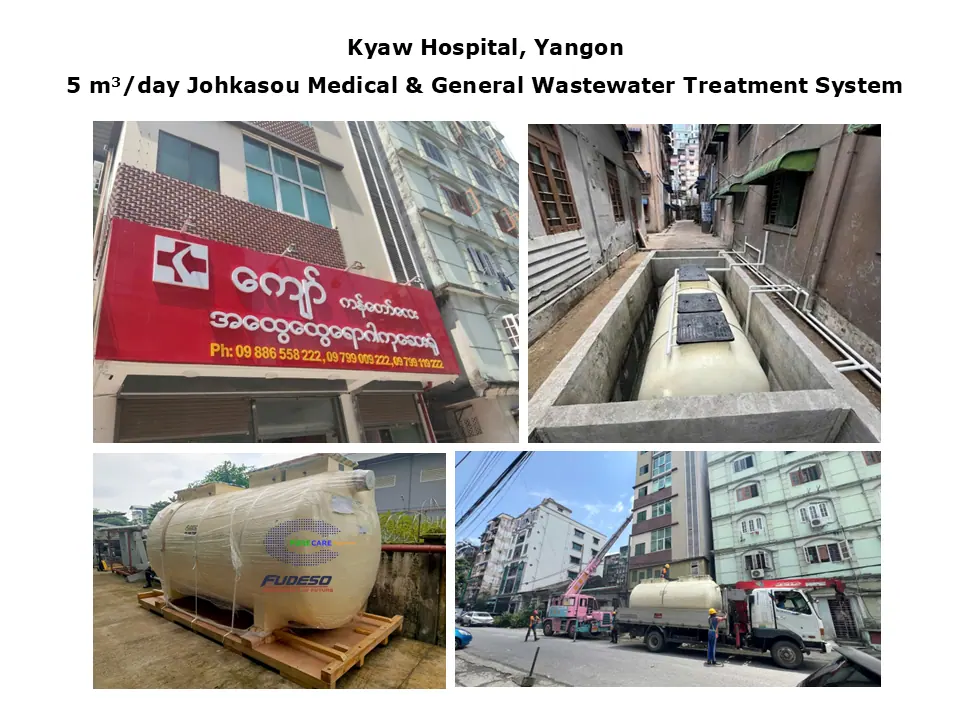
Brand New medical wastewater treatment system (Kyaw Hospital)
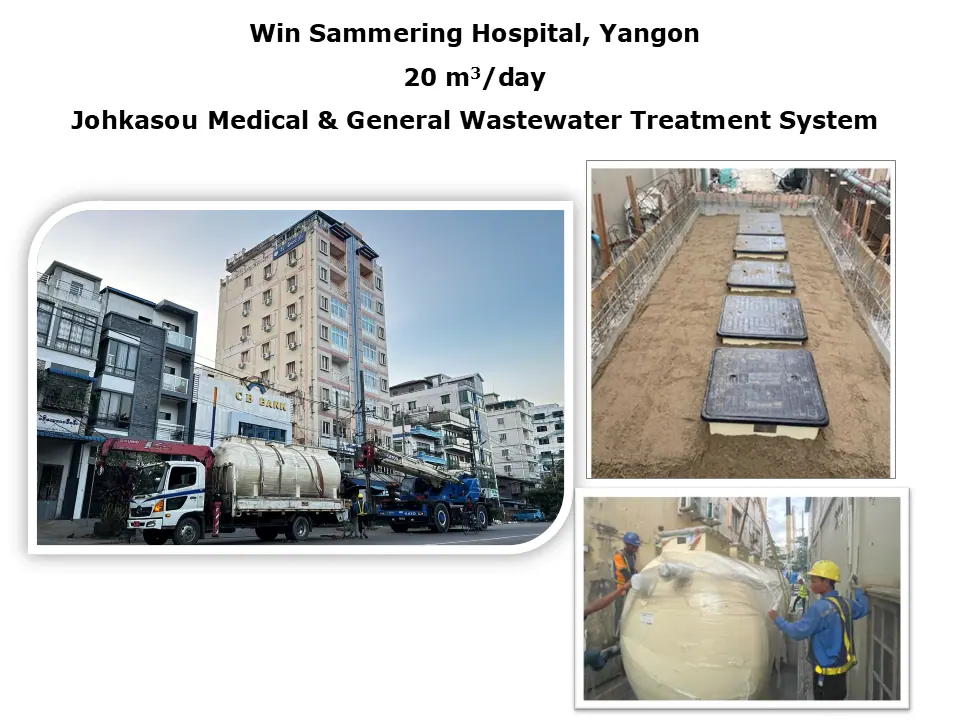
Wastewater Treatment System for Win Sammering Hospital
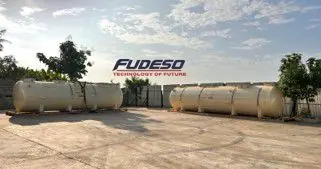
Brand New medical wastewater treatment system (Mandalar Hospital)
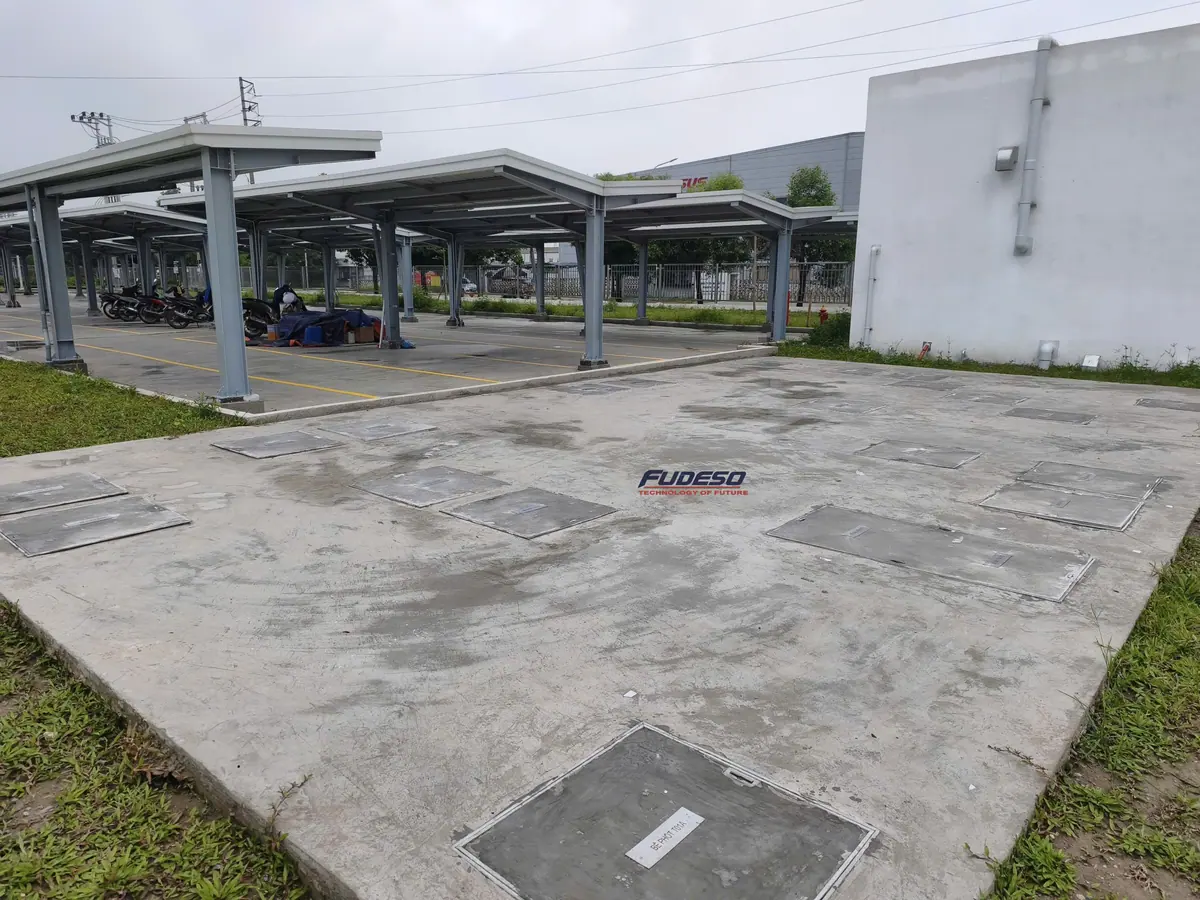
Domestic wastewater system treatment for GT Factory, Ninh Binh Province
Request a consultation
A FUDESO engineer will get back to you soon to discuss and arrange a site survey.
Hotline (+84) 24 3206 3222